Efficacy of a New Treatment Maneuver for Posterior Canal Benign Paroxysmal Positional Vertigo
Published on: September 1, 2006
-
J Am Acad Audiol. 2006 Sep;17(8):598-604.
-
The American Institute of Balance, 8200 Bryan Dairy Road, Suite 340, Largo, FL 33777, USA.
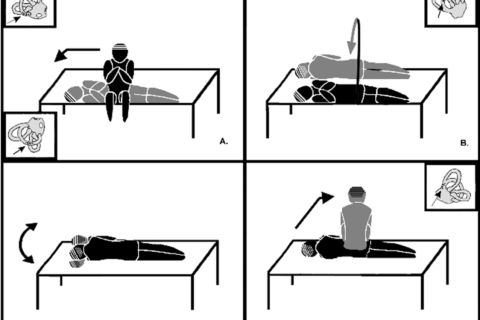
Existing treatment maneuvers for posterior canal benign paroxysmal positional vertigo (PC-BPPV) include the Semont liberatory maneuver (SLM) and canalith repositioning maneuver (CRM). Independent investigations reveal that these maneuvers provide an excellent outcome for most patients. However, certain aspects of these maneuvers, such as hyperextension of the neck for CRM and brisk lateral motion for the SLM, are contraindicated for patients with vertebrobasilar insufficiency, cervical spondylosis, back problems, and so forth. A hybrid approach, the Gans repositioning maneuver (GRM) was developed for use with these patients. The purpose of this project was to assess efficacy of the GRM for treatment of PC-BPPV. Two-hundred seven participants were enrolled in this prospective study. All participants were treated with the GRM. Six different clinicians performed the treatments. Participants returned for follow-up at one-week intervals until it was determined that the PC-BPPV was clear. On average, 1.25 GRM treatments were required to resolve the PC-BPPV. The majority of the participants (80.2%) were cleared with one GRM treatment, and 95.6% were clear after two treatments. Recurrence rate was 5%. There was no difference in outcome based on clinician. The GRM is an efficacious treatment maneuver for PC-BPPV and may be preferential for use in patients with neck, back, hip, and/or mobility issues that contraindicate the use of SLM or CRM.