VIDEO – Horizontal Canal (HC)-BPPV Conversion
Published on: August 26, 2013
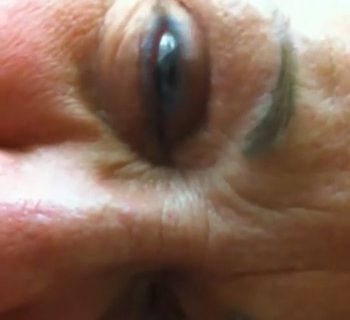
The presence of a transient but long-lived positional geotropic or ageotropic nystagmus accompanied by strong vertigo is often the hallmark of otolith debris within the horizontal semicircular canal. Furthermore, the nystagmus may also change direction within a single head position based on the debris location relative to the cupula (Roberts and Gans, 2008). Prior to the literature’s discussion of HC-BPPV, this sequeala was often referred to as a “central positional vertigo”. It was classified as a “peripheral-central non-localizing” finding and not much more was addressed, other than to say it usually resolved.
HC migration typically occurs during a PC-BPPV treatment but may also occur due to self-migration with everyday activities i.e. rolling over in bed etc. At AIB we have also seen a higher incidence of bilateral HC post-head trauma, just as with all bilateral cases. If the HC conversion occurs during positional testing or canalith repositioning treatment, the HC should be treated immediately, as the severity of the vertigo is far more intense and debilitating than occurs in the PC. This is why we strongly recommend that clinicians use a specific protocol of positioning/ positional testing to ensure that both PC are clear prior to transitioning a patient from a modified Hallpike onto their back, which is the position most likely to cause a migration. While you cannot completely remove the possibility of migration during evaluation/treatment, you can certainly reduce the incidence through technique and protocol.
Dr. Francesco Dispenza, of Italy, a co-editor of the newly released Textbook of Vertigo Diagnosis and Management and I, presently are conducting a study on a spectrum of HC-BPPV issues. Watch for the presentation and publication of this international investigation sometime next year.